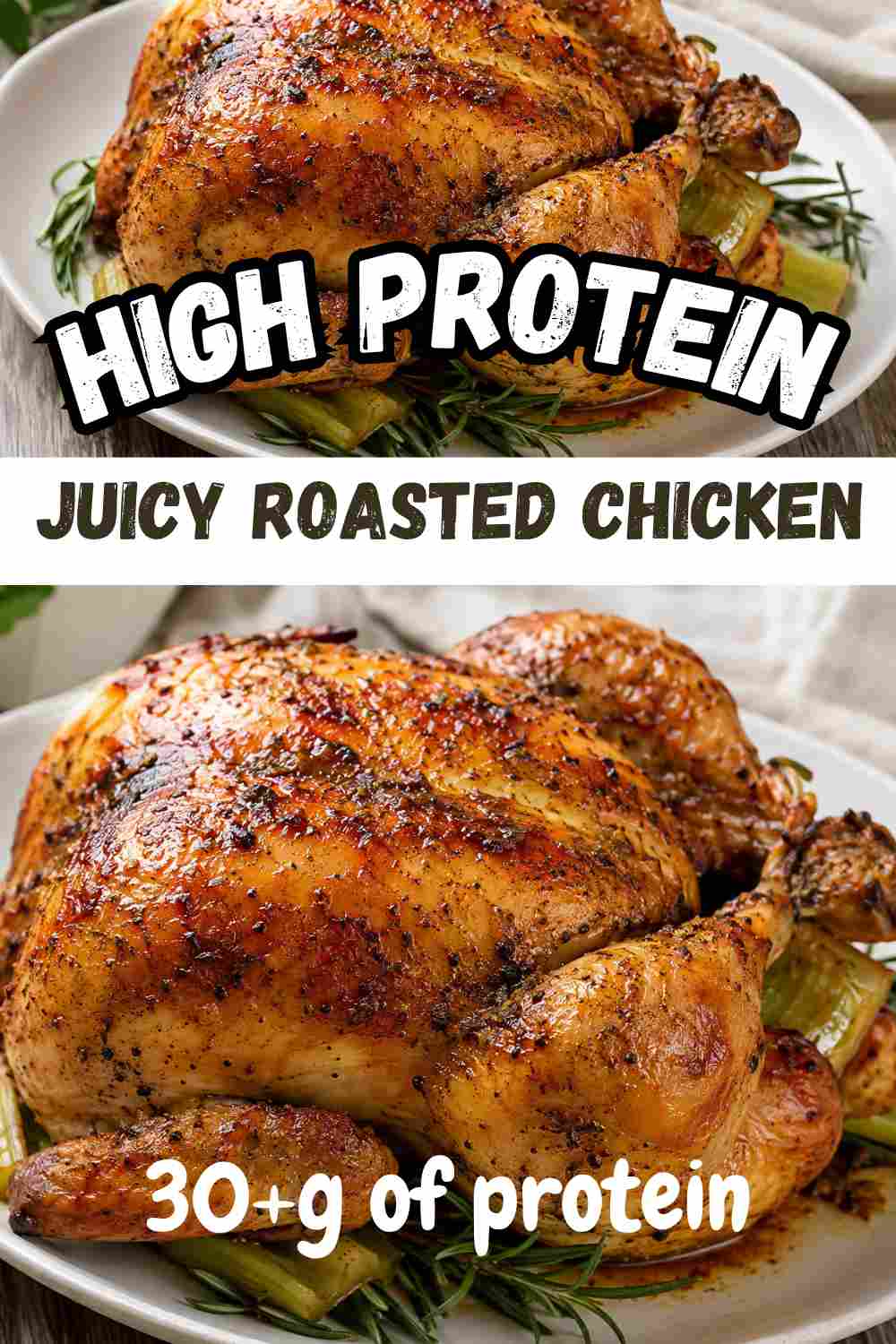
Juicy Roasted Chicken is tender, flavorful, and packed with protein, making it an easy healthy dinner for busy weeknights, meal prep, and a high protein diet. Finding a dinner that feels comforting, satisfying, and nourishing at the same time can be harder than it sounds. When you are trying to eat more protein, prepare healthier meals, or simply get dinner on the table without relying on heavily processed foods, a simple roasted chicken can be one of the best recipes to keep in your rotation. This Juicy Roasted Chicken is a classic, flavorful option with tender meat, beautifully seasoned skin, and plenty of protein in every serving.
Whole roasted chicken is also one of those recipes that proves healthy eating does not have to be complicated. A few simple ingredients create a meal that feels special enough for Sunday dinner but practical enough for a regular weeknight. The chicken develops rich flavor as it roasts, while the butter helps keep the meat moist and gives the outside a deliciously savory finish. With approximately 31 grams of protein per serving, it fits naturally into a high protein meal plan.
If you are looking for easy high protein recipes that the whole family can enjoy, Juicy Roasted Chicken is a great place to start. It can be served alongside vegetables, potatoes, rice, salad, or other favorite side dishes. The leftovers are just as useful, making this recipe especially appealing for meal prep, healthy lunches, and quick high protein meals throughout the week.
Why You’ll Love This Recipe
Juicy Roasted Chicken is the kind of recipe that earns a permanent place in your dinner rotation because it combines simplicity with satisfying flavor. The ingredient list is straightforward, but the result is anything but boring. The combination of onion powder, salt, pepper, butter, and celery gives the chicken a comforting roasted flavor while allowing the natural taste of the meat to shine through.
Another reason to love this recipe is its versatility. You can serve roasted chicken as the centerpiece of a traditional family dinner, add it to a high protein lunch bowl, or use leftover chicken in sandwiches, salads, wraps, soups, and meal-prep containers. Cooking a whole chicken also gives you more than one meal, which can make planning healthy meals much easier during a busy week.
The texture is another major highlight. Proper roasting creates tender, juicy meat while the outside becomes beautifully browned and flavorful. For those who prefer especially crisp skin, roasting the chicken at a higher temperature can create an even more golden exterior. A 425°F oven for roughly 50 to 60 minutes can work well for a smaller whole chicken, provided the thickest part of the thigh reaches a safe internal temperature of 165°F. Cooking time can vary depending on the chicken’s exact size and your oven, so temperature is more important than the clock.
Health Benefits of This Recipe
Chicken is one of the most popular high protein foods for a reason. It provides high-quality protein, which supplies the amino acids your body needs for maintaining and repairing muscle tissue. Protein is also an important part of a satisfying meal because it can help you feel fuller for longer. For people following a high protein diet, including a protein-rich main dish like roasted chicken can make it easier to build balanced meals throughout the day.
With approximately 31 grams of protein per serving based on the nutrition information provided, this recipe can make a substantial contribution toward your daily protein intake. Protein is particularly useful when paired with regular physical activity because adequate protein supports muscle maintenance and recovery. Whether your goal is building strength, maintaining muscle while losing weight, or simply eating more balanced meals, protein-rich foods can be an important part of your overall eating pattern.
The chicken also works well as part of a nutrient-dense meal when paired with vegetables, whole grains, beans, or other minimally processed sides. You can easily create a balanced dinner by serving a portion of roasted chicken with roasted broccoli, green beans, a fresh salad, or a moderate serving of potatoes or brown rice. This makes it easy to adapt the recipe to different nutritional goals without changing the main dish.
Butter contributes richness and flavor, although it also increases the fat and calorie content of the recipe. If you are specifically looking for high protein low calorie recipes, you can control the amount of butter used or focus more heavily on the lean chicken meat and vegetable-based side dishes. The goal does not have to be eliminating flavorful ingredients; instead, balance the entire meal according to your needs.
What Makes This Recipe High Protein
The main reason Juicy Roasted Chicken qualifies as a high protein recipe is simple: the whole chicken provides a concentrated source of protein. Chicken contains all of the essential amino acids your body needs, making it a complete protein source. Because the chicken is the main component of the meal, you can easily build the rest of your plate around it.
The provided nutrition information lists approximately 423 calories, 32 grams of fat, 1 gram of carbohydrates, and 31 grams of protein per serving. That combination makes this recipe particularly useful for anyone prioritizing protein while keeping carbohydrates relatively low. The exact nutrition values can vary depending on the size of the chicken, the portion consumed, how much skin is eaten, and how much butter remains with each serving.
One of the best things about a protein-rich main dish is that it gives you plenty of flexibility. You can keep the meal lower in carbohydrates by serving the chicken with non-starchy vegetables and salad, or add a serving of rice, quinoa, potatoes, or whole-grain bread when you want a more substantial meal. This flexibility makes roasted chicken suitable for many different eating styles.
For people searching for high protein dinner ideas, this recipe is especially practical because it does not depend on protein powders, specialty ingredients, or complicated preparation. It uses a familiar whole-food protein source and can be paired with almost anything. That makes it an easy choice for families, meal preppers, and anyone trying to eat more protein without making every meal complicated.
Tips & Variations
For the juiciest chicken, one of the most important details is avoiding overcooking. Chicken should reach a safe internal temperature of 165°F in the thickest part of the meat, but it should not be left in the oven significantly longer than necessary. An instant-read thermometer is one of the most reliable tools for checking doneness. Insert it into the thickest part of the thigh near the bone without touching the bone itself for the most useful reading.
If crispy skin is a priority, the higher-temperature method is a great option. Roasting a roughly 3-pound chicken at 425°F for about 50 to 60 minutes can encourage deeper browning and crispier skin than the lower-temperature method. Because ovens and chickens vary, start checking the internal temperature before the expected finishing time rather than relying entirely on minutes. If the skin becomes deeply browned before the chicken reaches the correct internal temperature, you can loosely cover the top with foil while the meat continues cooking.
The seasonings are also easy to customize. Garlic powder, smoked paprika, dried thyme, rosemary, Italian seasoning, or a small amount of lemon zest can add a completely different flavor profile without changing the basic recipe. You can also add fresh herbs around the chicken for an aromatic roasted flavor. If you enjoy a little heat, paprika, cayenne, or crushed red pepper can give the skin a gentle kick.
For a lower-calorie variation, you can reduce the amount of butter and rely more heavily on herbs and spices for flavor. Keep the skin if you enjoy it, or remove it from your portion if you want to reduce the fat content. If you are following a lower-carbohydrate eating pattern, pair the chicken with roasted cauliflower, zucchini, asparagus, broccoli, leafy greens, or a simple cucumber salad.
This recipe can also become the foundation for several different meals. Slice leftover chicken over a large salad for a high protein lunch, add it to a whole-grain wrap with vegetables, or combine it with rice and roasted vegetables for an easy meal-prep bowl. Shredded roasted chicken can also be added to soup or used in sandwiches, making one whole chicken surprisingly versatile.
How to Store & Meal Prep
Juicy Roasted Chicken is an excellent meal-prep recipe because the cooked meat can be used in several different ways throughout the week. Once the chicken has rested and cooled appropriately, remove the meat from the bones if you want convenient portions for lunches and dinners. Store the chicken in airtight containers in the refrigerator and keep portions ready to combine with different sides.
For best quality, refrigerated cooked chicken should generally be used within a few days. Divide larger quantities into smaller containers rather than keeping everything in one large container. Smaller portions cool and reheat more conveniently, and they make it easier to grab exactly what you need for a quick high protein meal.
The chicken can also be frozen for longer storage. Place cooled portions in freezer-safe airtight containers or bags, removing as much excess air as practical. Label the portions with the date so you can keep track of how long they have been stored. Freezing shredded or sliced chicken can be especially convenient because you can thaw only the amount needed for a meal.
When reheating, use gentle heat and avoid cooking the chicken longer than necessary. A splash of broth or a small amount of water can help prevent lean meat from drying out during reheating. In the oven, covering the chicken loosely can help retain moisture. If you want to bring back some crispness to the skin, reheating uncovered at a moderate temperature can help, although the skin may not become exactly as crisp as it was when freshly roasted.
Meal prepping with a whole chicken can also help reduce food waste. The meat can become the protein component for several meals, while the carcass can be used as the foundation for homemade stock if desired. This makes the recipe practical not only for healthy eating but also for efficient grocery planning.
Common Mistakes to Avoid
One common mistake when roasting whole chicken is relying entirely on cooking time instead of checking the internal temperature. A chicken that weighs approximately three pounds may cook differently depending on its shape, starting temperature, oven accuracy, and roasting pan. The safest and most reliable approach is to use an instant-read thermometer and make sure the thickest part of the thigh reaches 165°F.
Another mistake is cutting into the chicken immediately after removing it from the oven. Although it can be tempting to check the meat right away, resting gives the juices time to redistribute throughout the chicken. Allowing the roasted chicken to rest before carving can help the meat remain noticeably juicier instead of allowing flavorful juices to run onto the cutting board.
Overcrowding or using a pan that does not allow enough room around the chicken can also affect browning. Air circulation helps the exterior roast properly, while excess moisture can interfere with crisping. For the best texture, give the chicken enough space and avoid covering it during the main roasting period unless you need to protect the skin from excessive browning.
Another issue is seasoning only the outside and forgetting that a whole chicken benefits from seasoning throughout. The cavity can be seasoned as well, and aromatic ingredients such as celery help add flavor as the chicken roasts. At the same time, be mindful of adding excessive salt, particularly if you plan to serve the chicken with salty sauces, gravies, or seasoned side dishes.
Finally, avoid assuming that crispier automatically means better. A beautifully browned exterior is appealing, but the most important goal is properly cooked, juicy meat. If you prefer a crispier skin, using a higher roasting temperature can help, but keep an eye on the chicken and use an internal thermometer to determine when it is finished.
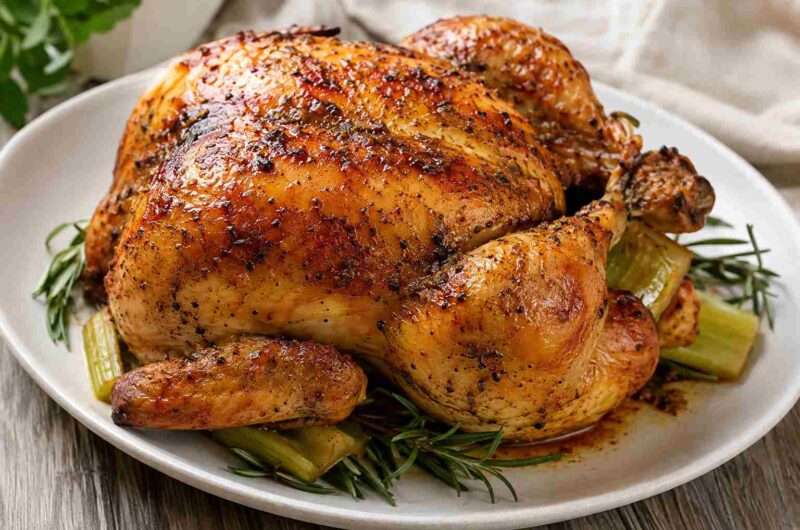
Juicy Roasted Chicken
Course: High Protein Guides4
servings15
minutes1
hour15
minutes423
kcal30
minutes2
hoursKeep the screen of your device on
Ingredients
1 (3 pound) whole chicken, giblets removed
salt and black pepper to taste
1 tablespoon onion powder, or to taste
½ cup butter
1 stalk celery, leaves removed
Instructions
- Gather all ingredients. Preheat the oven to 350 degrees F (175 degrees C).
- Place chicken in a roasting pan; season generously inside and out with onion powder, salt, and pepper. Place 3 tablespoons of butter in chicken cavity; arrange dollops of remaining butter on the outside of chicken.
- Cut celery into 3 or 4 pieces; place in the chicken cavity.
- Bake chicken uncovered in the preheated oven until no longer pink at the bone and the juices run clear, about 1 hour and 15 minutes. An instant-read thermometer inserted into the thickest part of the thigh, near the bone, should read 165 degrees F (74 degrees C).
- Remove from the oven and baste with drippings. Cover with aluminum foil and allow to rest for about 30 minutes before serving.
Nutrition Facts ( per serving ):
| Nutrient | Amount |
|---|---|
| Calories | 423 |
| Fat | 32g |
| Carbohydrates | 1g |
| Protein | 31g |
Juicy Roasted Chicken is a classic high protein dinner that proves simple food can still be incredibly satisfying. With tender chicken, savory seasoning, rich roasted flavor, and crisp golden skin, it is an easy recipe to make when you want a comforting meal without complicated ingredients or elaborate preparation. The approximately 31 grams of protein per serving also makes it a practical choice for anyone trying to include more protein-rich foods in their daily routine.