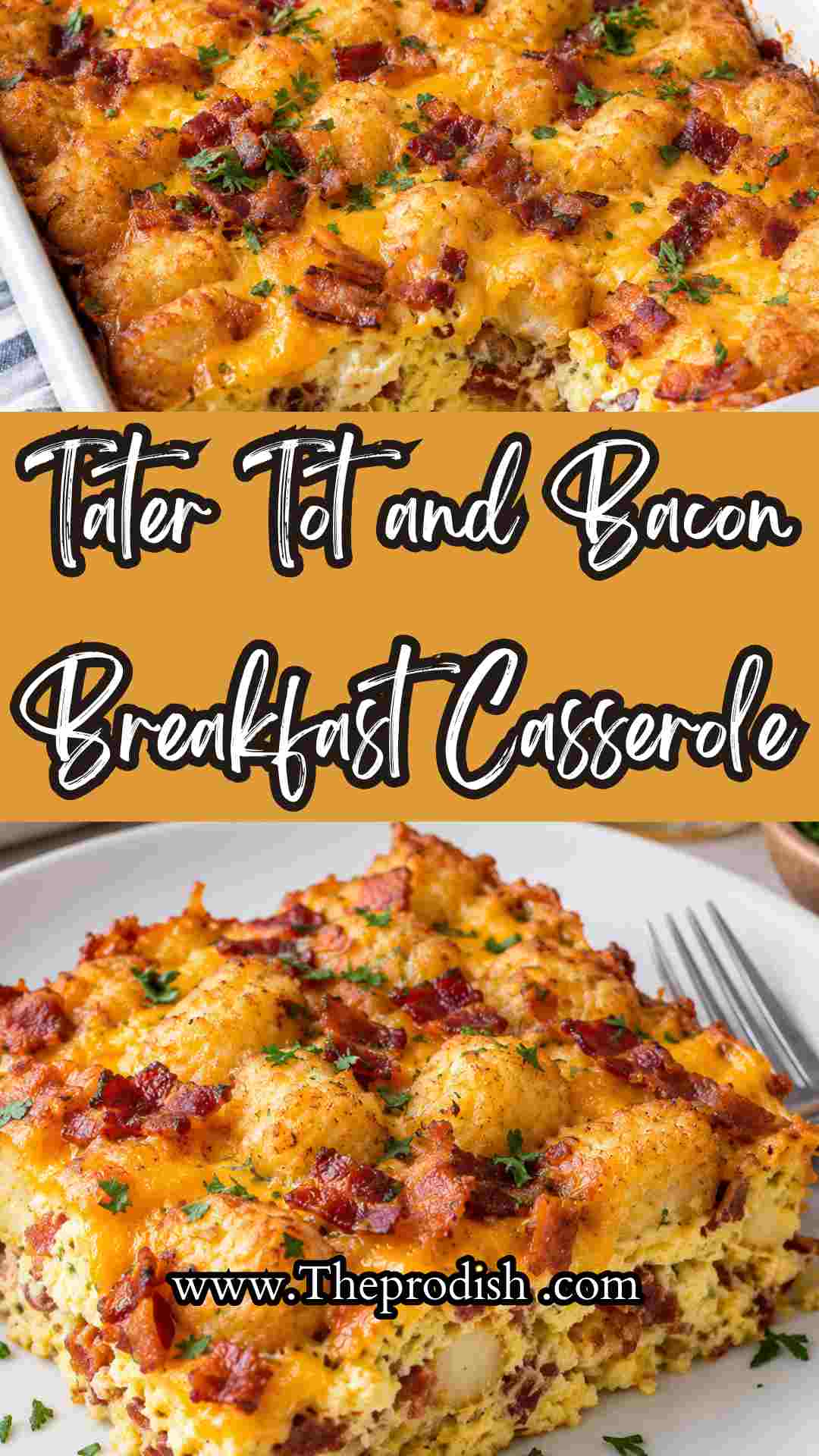
If you’re looking for a hearty breakfast that can feed the whole family while still fitting into a protein-focused meal plan, this Tater Tot and Bacon Breakfast Casserole is an easy choice. Crispy potato nuggets, savory bacon, fluffy eggs, milk, and melted Cheddar cheese come together in one comforting casserole that is perfect for slow weekend mornings, family brunches, or make-ahead breakfasts. With 27 grams of protein per serving, it also makes a satisfying option when you want a breakfast that keeps you full.
Breakfast casseroles are especially useful when you want something simple without spending the entire morning in the kitchen. This recipe combines several familiar ingredients in one baking dish, making it convenient for busy households and meal prep. The combination of eggs, bacon, and cheese provides substantial protein, while the potatoes add carbohydrates for energy and a deliciously comforting texture.
For anyone exploring high protein recipes, this casserole is a practical addition to the breakfast rotation. It is rich, filling, and easy to customize depending on your preferences. Whether you’re planning a family brunch, looking for an easy breakfast meal prep idea, or simply want a warm and satisfying breakfast, this casserole is worth saving.
Why You’ll Love This Recipe
One of the best things about this Tater Tot and Bacon Breakfast Casserole is how approachable it is. The ingredients are simple grocery-store staples, so you don’t need specialty foods or complicated cooking techniques. Bacon adds a savory flavor throughout the casserole, while eggs and Cheddar cheese create a rich, satisfying center. The frozen potato nuggets make the recipe particularly convenient because they can go directly into the casserole without complicated preparation.
This is also a great recipe for busy mornings because much of the work happens in the oven. Once the ingredients are layered in the baking dish, you can let the casserole bake while you prepare coffee, fruit, or other breakfast favorites. It works beautifully for weekend brunches, holiday mornings, family gatherings, and casual breakfasts when you want something substantial.
The casserole is also easy to adapt. You can add vegetables, change the cheese, adjust the seasonings, or experiment with different protein sources. With approximately 522 calories, 27 grams of protein, 30 grams of carbohydrates, and 36 grams of fat per serving, it provides a substantial meal that can work well as part of a balanced breakfast.
Health Benefits of This Recipe
Protein is one of the reasons this breakfast casserole can be so satisfying. Eggs, bacon, and Cheddar cheese all contribute protein, which is important for maintaining and repairing body tissues and supporting normal muscle function. Including a protein-rich food at breakfast can also help make a meal more filling, which can be useful when you’re trying to avoid constantly reaching for snacks throughout the morning.
Eggs are particularly useful in high protein breakfast recipes because they provide complete protein along with several important nutrients. They also contribute vitamins and minerals such as vitamin B12, selenium, and choline. Cheddar cheese adds additional protein and calcium, while bacon contributes protein and flavor. Because the casserole combines several protein-containing ingredients, every serving offers a meaningful amount of protein.
The potato nuggets provide carbohydrates, which are an important source of energy. Rather than viewing carbohydrates as something that automatically needs to be avoided, they can be included as part of a balanced diet according to individual nutritional needs. If you’re following a high protein diet, pairing carbohydrates with protein and other nutrient-rich foods can create a more satisfying and balanced meal.
What Makes This Recipe High Protein
The main protein sources in this casserole are eggs, bacon, and Cheddar cheese. Twelve large eggs provide a substantial amount of protein across the entire casserole, while bacon and cheese increase the total protein content and contribute the savory flavor that makes breakfast casseroles so appealing. Milk provides a smaller additional contribution.
Based on the nutrition information provided, each serving contains approximately 27 grams of protein. That makes this casserole a useful option for people looking to include more protein in their morning meals without relying entirely on protein powders or specialty products. It can fit naturally into a collection of high protein breakfast recipes and can be paired with fresh fruit or vegetables for additional variety.
If you’re building a diet around high protein foods, meals like this can make it easier to reach your daily protein target while still enjoying familiar comfort foods. The key is to consider the entire day’s intake rather than focusing on a single meal. Pairing a serving with a light fruit salad or fresh vegetables can also add fiber, vitamins, and minerals to the overall meal.
Tips & Variations
For the best texture, allow the casserole to bake until the center is fully set and the cheese is melted and lightly browned. Since oven temperatures and baking dishes can vary, start checking toward the end of the recommended baking time. A glass or ceramic baking dish may cook slightly differently from a metal pan, so look for a firm center rather than relying only on the clock.
There are plenty of ways to customize this breakfast casserole. You can add diced bell peppers, onions, spinach, mushrooms, or tomatoes for extra vegetables and flavor. Different cheeses such as Monterey Jack, Colby, mozzarella, or a Mexican-style blend can also change the character of the dish. If you prefer a little heat, diced jalapeños, red pepper flakes, or a few dashes of hot sauce can give it a spicy twist.
For a lighter variation, you can experiment with using leaner bacon, reduced-fat cheese, or a combination of whole eggs and egg whites. If you’re interested in high protein low calorie recipes, reducing some of the higher-fat ingredients while keeping the eggs and adding vegetables can make the overall meal lighter. Keep in mind that changing ingredients will also change the nutritional values.
How to Store & Meal Prep
This casserole is well suited to meal prep because it can be portioned after baking and stored for several days. Once it has cooled, transfer individual portions to airtight containers and refrigerate. Properly refrigerated leftovers are generally best enjoyed within about three to four days. Keeping portions separate makes it easier to grab a serving when you need a quick breakfast.
When you’re ready to eat, reheat an individual portion in the microwave until heated through. You can also reheat it in the oven if you prefer a firmer texture. If reheating several portions at once, covering the dish loosely can help prevent the surface from drying out. Make sure leftovers are thoroughly heated before serving.
For longer storage, portions can also be frozen in freezer-safe containers. Allow the casserole to cool completely before freezing and package individual servings securely to help prevent freezer burn. Thaw frozen portions in the refrigerator before reheating for the most even texture. Potatoes may soften slightly after freezing and thawing, but the casserole can still be a convenient make-ahead breakfast.
Common Mistakes to Avoid
One common mistake is not cooking and draining the bacon properly before adding it to the casserole. Excess bacon grease can make the finished dish unnecessarily greasy and may affect the texture of the eggs. Cooking the bacon until evenly browned and draining it on paper towels helps remove some of the excess fat while preserving the savory flavor.
Another mistake is cutting into the casserole before the center has fully set. The outside may appear cooked while the middle is still soft. Giving the casserole enough time in the oven allows the eggs to cook properly and helps the layers hold together when served. If your casserole dish is deeper than a standard 9×13-inch dish, it may require additional baking time.
It is also easy to overload the casserole with extra ingredients without considering their moisture content. Vegetables such as mushrooms, spinach, and tomatoes can release water as they cook, which may make the casserole softer. If adding moisture-rich vegetables, cooking or draining them first can help maintain a better texture.
Finally, avoid assuming that every substitution will produce exactly the same nutritional profile. Switching cheeses, bacon varieties, milk, or adding additional ingredients can significantly change the calories, fat, carbohydrates, and protein. If you’re tracking nutrition closely, recalculate the nutrition information based on the exact ingredients you use.
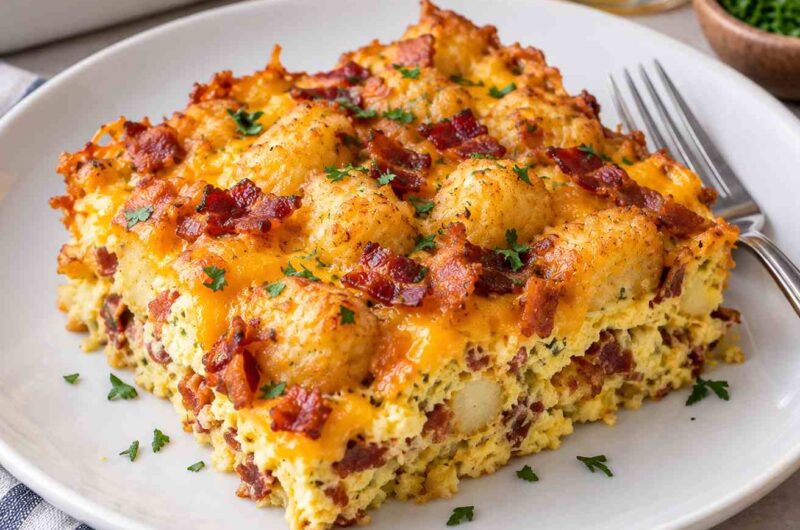
Tater Tot and Bacon Breakfast Casserole
8
servings10
minutes1
hour5
minutes522
kcal1
hour15
minutesKeep the screen of your device on
Ingredients
1 pound bacon, diced
1 (32 ounce) package frozen bite-size potato nuggets (such as Tater Tots)
12 large eggs
½ cup milk
1 pinch salt
⅛ teaspoon ground black pepper
2 cups shredded Cheddar cheese
Instructions
- Gather ingredients. Preheat the oven to 350 degrees F (175 degrees C).
- Place bacon in a large skillet and cook over medium-high heat, turning occasionally, until evenly browned, 5 to 8 minutes. Drain bacon on paper towels.
- Spread bacon into the bottom of a 9×13-inch baking dish to cover. Spread potato nuggets over the bacon.
- Beat eggs, milk, salt, and pepper together in a bowl; pour over the layer of potato nuggets.
- Top with cheddar cheese and bake in the preheated oven until hot in the center, about 1 hour.
- Serve hot. Enjoy!
Nutrition Facts ( per serving ):
| Nutrient | Amount |
|---|---|
| Calories | 522 kcal |
| Fat | 36g |
| Carbohydrates | 30g |
| Protein | 27g |
This Tater Tot and Bacon Breakfast Casserole brings together everything you want from a comforting breakfast: savory bacon, fluffy eggs, melted Cheddar cheese, and satisfying potato nuggets. With about 27 grams of protein per serving, it can also be a practical addition to a protein-focused breakfast routine. Best of all, it uses straightforward ingredients and doesn’t require complicated preparation.