
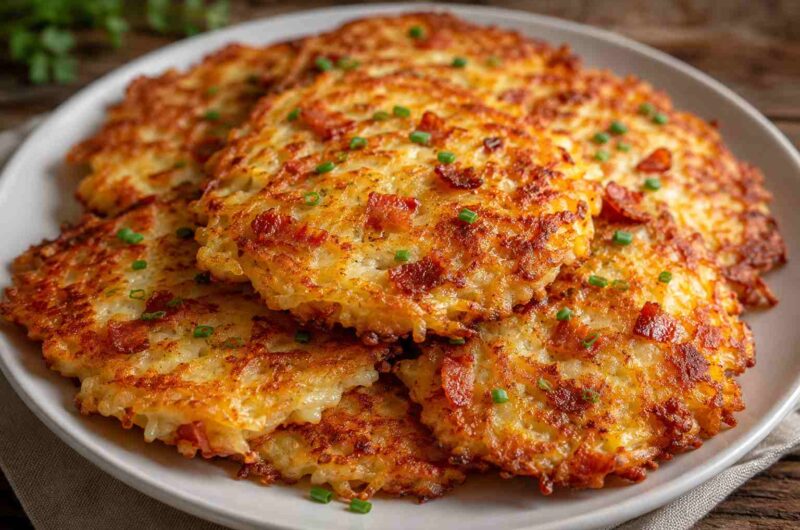
Crispy, cheesy Potato Pancakes made with Parmesan, Cheddar, and potatoes. An easy comfort-food recipe with 15g of protein per serving. When you want something crispy, cheesy, comforting, and satisfying, these Cheesy Potato Pancakes are hard to beat. They turn simple potatoes into golden, pan-fried pancakes with a deliciously crisp exterior and a soft, cheesy center. Parmesan and Cheddar add plenty of savory flavor, while eggs and milk help create a tender texture that makes every bite satisfying.
Potatoes often get overlooked when people search for nutritious or high protein recipes, but the right combination of ingredients can turn them into a much more balanced meal. With eggs, Parmesan, Cheddar, and optional bacon bits, these pancakes provide approximately 15 grams of protein and 427 calories per serving, making them a filling option for breakfast, lunch, dinner, or a hearty snack.
If you’re collecting easy recipes that are comforting without requiring complicated ingredients, these potato pancakes deserve a place on your list. They’re especially useful for busy days when you want something homemade and flavorful without spending hours in the kitchen. Serve them on their own, pair them with a fresh salad, or add a protein-rich topping for an even more satisfying meal.
Why You’ll Love This Recipe
There are plenty of reasons to keep Cheesy Potato Pancakes in your regular recipe rotation. First, they’re made with everyday ingredients that are easy to find. Potatoes, eggs, milk, flour, cheese, and a few seasonings come together to create a dish that feels much more special than the simplicity of its ingredients suggests.
The texture is another major reason to love them. When cooked properly, the outside becomes beautifully golden and crisp while the inside stays soft and tender. The combination of Parmesan and Cheddar gives the pancakes a rich, savory flavor, and optional bacon bits add another layer of smoky goodness.
They’re also versatile enough to work for different meals. Enjoy them as a savory high protein breakfast alongside eggs, serve them as a side dish with chicken or turkey for dinner, or keep them on hand for a quick snack. Because they’re easy to customize, you can adjust the cheese, seasonings, and toppings to suit your preferences.
Health Benefits of This Recipe
Potatoes provide carbohydrates that can help supply the body with energy, making them particularly useful as part of a balanced meal. They also provide nutrients such as potassium and vitamin C. Rather than avoiding potatoes completely, pairing them with protein-rich ingredients can make them part of a satisfying and well-rounded eating pattern.
The eggs and cheese contribute most of the protein in these pancakes. Protein is an important macronutrient involved in maintaining and repairing body tissues, including muscle. Including protein at meals can also help make food more satisfying, which may be helpful when you’re trying to build balanced meals or manage hunger throughout the day.
Parmesan and Cheddar also contribute calcium and other nutrients while bringing a lot of flavor to the recipe. Because cheese is naturally rich and calorie-dense, portion size still matters, especially if you’re following a high protein low calorie diet. For a lighter version, you can reduce the amount of cheese or use a reduced-fat variety while keeping the pancakes flavorful.
The optional bacon bits can provide additional protein and smoky flavor, although they can also increase the overall sodium and fat content. If you’re watching sodium, consider using less bacon and reducing the added salt. These simple adjustments can help you make the recipe fit comfortably into your personal eating style.
What Makes This Recipe High Protein
The protein in these Cheesy Potato Pancakes comes primarily from eggs, Parmesan cheese, Cheddar cheese, milk, and optional bacon bits. Eggs are especially useful in recipes like this because they provide complete protein while also helping bind the grated potatoes and other ingredients together.
Parmesan and Cheddar add both protein and a rich cheesy flavor, allowing you to increase the protein content without relying on a complicated ingredient list. Milk contributes a smaller amount of protein while helping create the right consistency for the pancake mixture.
Based on the nutrition information provided, each serving contains approximately 15 grams of protein, 43 grams of carbohydrates, 22 grams of fat, and 427 calories. That makes these pancakes more protein-rich than a basic potato pancake while still providing the carbohydrates needed for an energy-supporting meal.
If you’re specifically following a high protein diet, you can increase the protein even further by serving the pancakes with Greek yogurt, cottage cheese, scrambled eggs, grilled chicken, turkey, or another lean protein source. This makes the recipe easy to incorporate into a higher-protein meal plan without changing the core recipe.
Tips & Variations
One of the most important tips for making great potato pancakes is managing moisture. Freshly grated potatoes naturally release water, and too much moisture can make the mixture loose and prevent the pancakes from becoming properly crisp. After grating the potatoes, gently squeeze out excess moisture before combining them with the other ingredients. This small step can make a noticeable difference in texture.
Don’t overcrowd the skillet when cooking. Giving each pancake enough space allows heat to circulate around the edges and helps them develop that desirable golden-brown crust. Cook them over medium heat rather than very high heat so the outside doesn’t brown too quickly while the inside remains undercooked.
You can easily customize the flavor depending on what you have available. Add garlic powder, smoked paprika, dried parsley, chives, or a little cayenne pepper for extra flavor. Green onions can also provide a fresh savory note. If you enjoy stronger cheese flavors, try replacing some of the Cheddar with mozzarella, Monterey Jack, or another favorite melting cheese.
For a higher-protein meal, serve the pancakes with plain Greek yogurt or cottage cheese. A poached or fried egg on top is another simple option that works especially well for breakfast. If you prefer a lighter version, reduce the amount of oil and butter used for pan-frying or use a good nonstick skillet.
Vegetarian eaters can simply leave out the optional bacon bits. For a lower-carbohydrate variation, you can experiment with replacing some of the potato with grated cauliflower or zucchini, although this will change the texture and flavor. If using zucchini, squeeze out as much moisture as possible before mixing.
How to Store & Meal Prep
Cheesy Potato Pancakes are convenient for meal prep because they can be cooked ahead and stored for later. Allow the cooked pancakes to cool before placing them in an airtight container. Store them in the refrigerator for up to about 3 to 4 days for the best quality.
For meal prep, place parchment paper between layers if you’re stacking several pancakes. This helps prevent them from sticking together and makes it easier to remove only the amount you need. They’re a practical option for preparing several servings at once and enjoying throughout a busy week.
For longer storage, the pancakes can be frozen. Arrange cooled pancakes in a single layer on a baking sheet and freeze them until firm. Once frozen, transfer them to a freezer-safe container or bag with parchment between the layers. Properly stored, they can generally be kept frozen for around 2 to 3 months for best quality.
When you’re ready to eat them, reheat refrigerated or frozen pancakes in a skillet, toaster oven, or air fryer. An air fryer or skillet is particularly helpful when you want to restore some of the crispness. Microwaving is quick, but it tends to produce a softer texture.
Common Mistakes to Avoid
One common mistake is leaving too much water in the grated potatoes. Excess moisture can make the pancake mixture difficult to handle and may prevent the outside from becoming crisp. Taking a moment to squeeze or drain the potatoes well can help produce a much better final texture.
Another mistake is using excessive heat. A very hot skillet may cause the outside to become dark before the center has had enough time to cook. Medium heat gives the pancakes time to become golden and crisp while allowing the inside to cook through.
Avoid making the pancakes too thick as well. Thick patties can be difficult to cook evenly, especially when the potato mixture contains several other ingredients. Smaller, moderately thin pancakes are generally easier to flip and tend to develop a better balance of crisp edges and tender centers.
Finally, don’t flip them too early. The pancakes need enough time to develop a stable golden crust before they’re turned. If the mixture is sticking badly or breaking apart, give it another minute or two to cook before attempting to flip it.
Cheesy Potato Pancakes
Course: Lunch Recipes6
servings15
minutes20
minutes427
kcal35
minutesKeep the screen of your device on
Ingredients
4 russet potatoes, peeled and grated
2 eggs
½ cup milk
1 cup all-purpose flour
½ cup grated Parmesan cheese
½ cup shredded Cheddar cheese
¼ cup real bacon bits (Optional)
1 teaspoon onion salt
1 teaspoon baking powder
1 teaspoon salt
½ teaspoon ground black pepper
¼ cup corn oil
2 tablespoons unsalted butter
Instructions
- Combine potatoes, eggs, and milk together in a large bowl.
- Stir flour, Parmesan cheese, Cheddar cheese, bacon bits, onion salt, baking powder, salt, and black pepper into potato mixture using a fork.
- Heat corn oil and butter in a large skillet over medium heat.
- Drop potato mixture by 2 tablespoonfuls onto skillet. Cook patties until golden brown, about 4 minutes per side
- Drain cooked pancakes on a paper towel-lined plate.
Nutrition Facts ( per serving ):
| Nutrient | Amount |
|---|---|
| Calories | 427 |
| Fat | 22g |
| Carbohydrates | 43g |
| Protein | 15g |
These Cheesy Potato Pancakes are a delicious example of how simple pantry ingredients can become a satisfying homemade meal. Crispy potatoes, melty Cheddar, savory Parmesan, eggs, and optional bacon create a combination that’s comforting enough for a weekend breakfast but easy enough to enjoy any day of the week.
With approximately 15 grams of protein per serving, these pancakes can also fit into a balanced high protein meal plan. Pair them with Greek yogurt, eggs, cottage cheese, or another protein-rich food when you want to make the meal even more filling. They can be enjoyed for breakfast, lunch, dinner, or as a savory snack depending on how you serve them.